24 Nov 2026
The Serial Position Effect: Design for the First Thing and the Last Thing
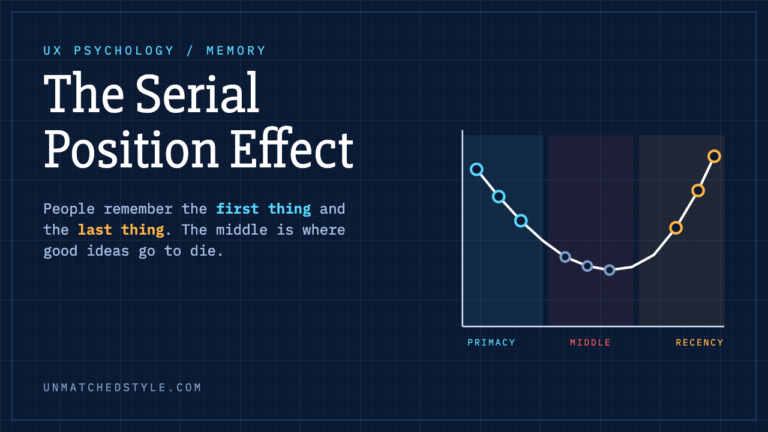
People remember the first and last things you show them and lose the middle. Here's the memory science behind the serial position effect and…
Read More →
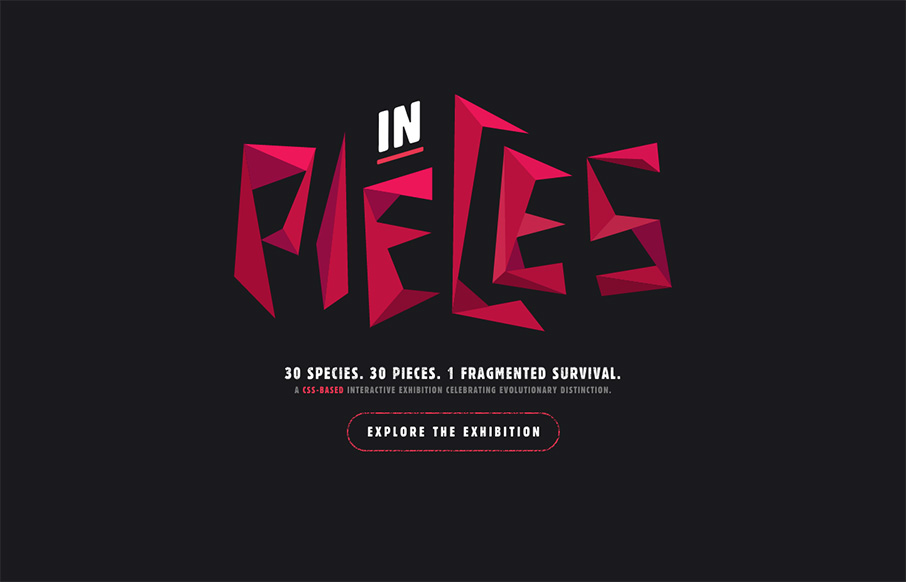
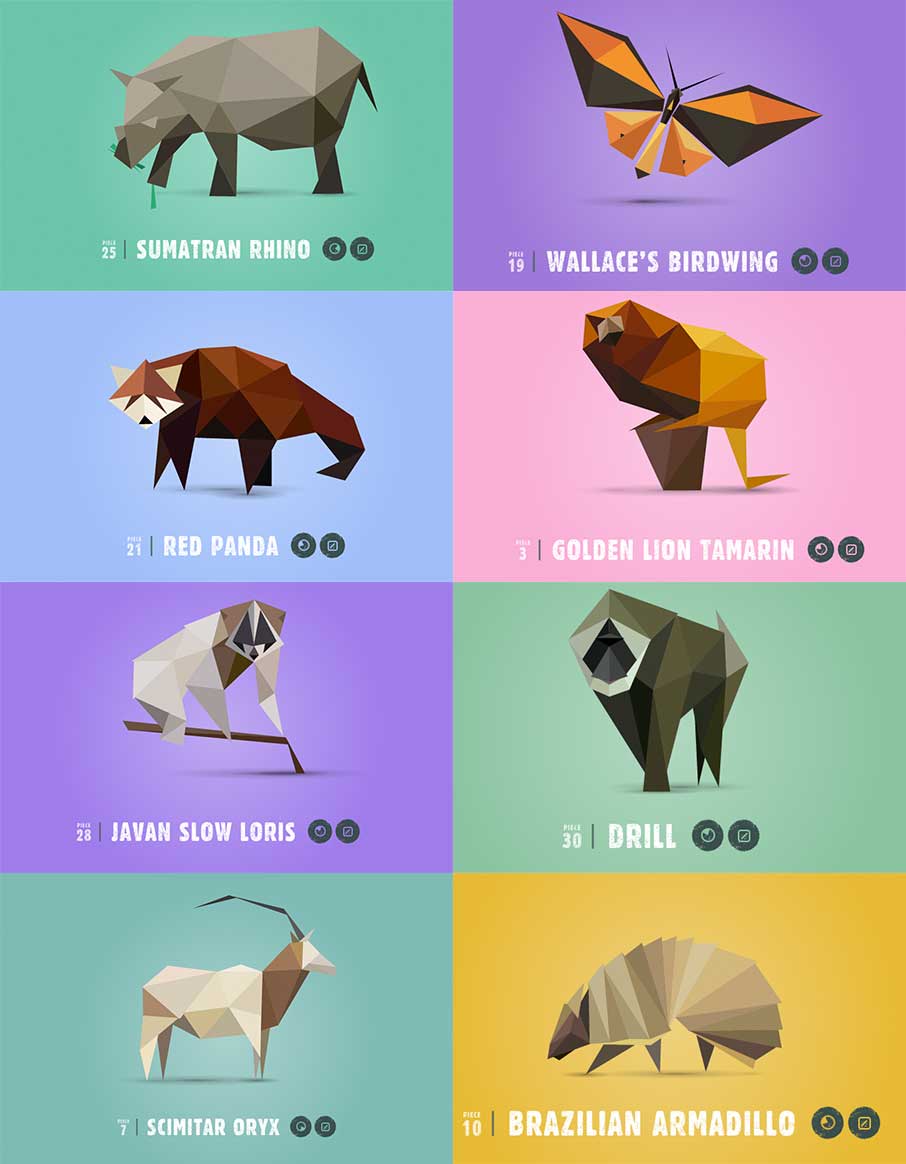
That’s what Bryan James did here in his personal project called Species in Pieces. ( @WengersToyBus www.bryanjamesdesign.co.uk )
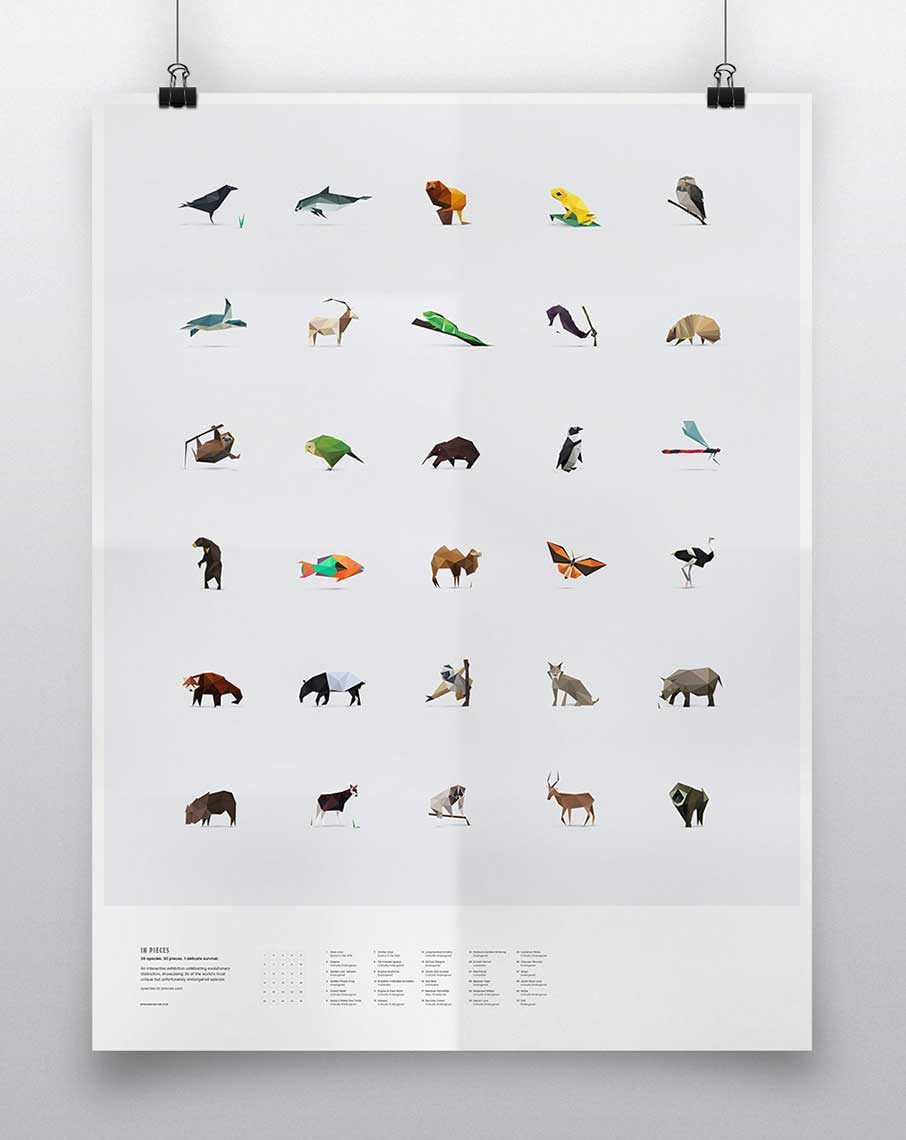
Above are some of the 30 endangered species that he hand crafted using CSS polygons and webkit / CSS animation.
Best to let Bryan (the designer) explain that:
“Born out of tinkering with a simple property, this project is unabashedly part-digital experiment. The core technology used here is just good old CSS – no canvas or webgl witchcraft.
Since hearing about CSS polygons, I’ve been a little surprised at the lack of furore around the technology, so I wanted to create something which not only worked as a project in itself, but also pushed this underused line of code as far as possible.
The shard-shifting capabilities work in webkit-browsers only, which of course is a limitation but at the same time, it works on mobile which are almost completely webkit-based. Firefox does support the clip-path property, but as an SVG referenced shape and thus, the coding for movement works in an entirely different manner. I wanted to focus purely on the CSS route.
Not heard of it? Here, take a line:
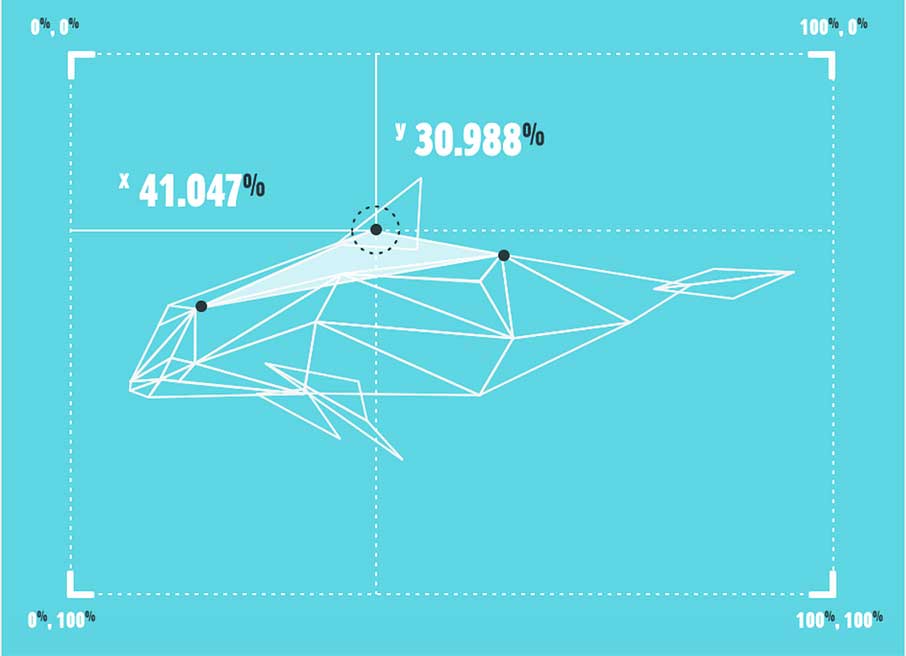
-webkit-clip-path: polygon( 40% 40%, 50% 60%, 60% 40% );
So, in essence — each shape is being morphed, moved and toyed with by a new set of co-ordinates, and as they are maintained as triangles throughout, this means 3 points, with CSS transitions to link up the movements. No tricks or tools have been used to get the illustrated results, code-wise or graphically. Point by point, shape by shape, each one has been handcrafted via a personally-created tracing JS function after illustration.”
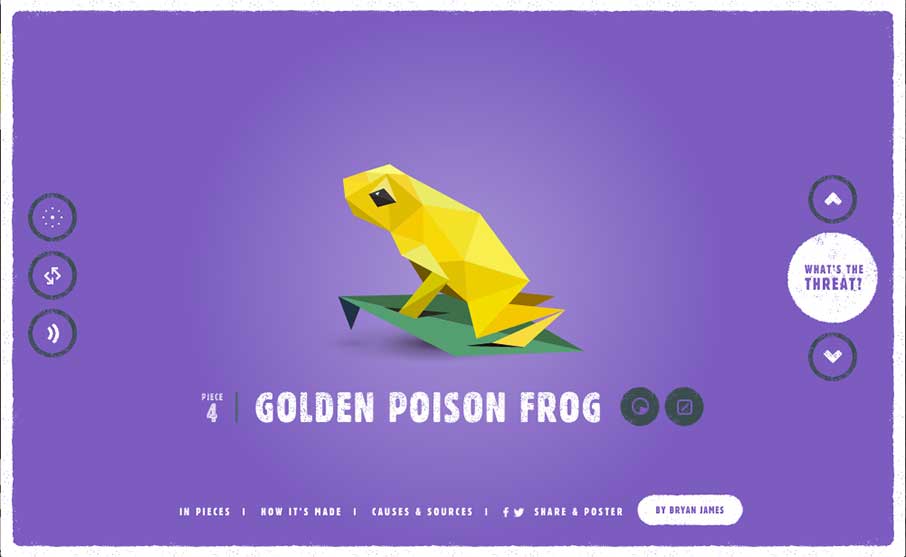
Most of the site stays the same as you scroll through the different animals, either through scrolling on your mouse – or using the fixed navigation on the right.
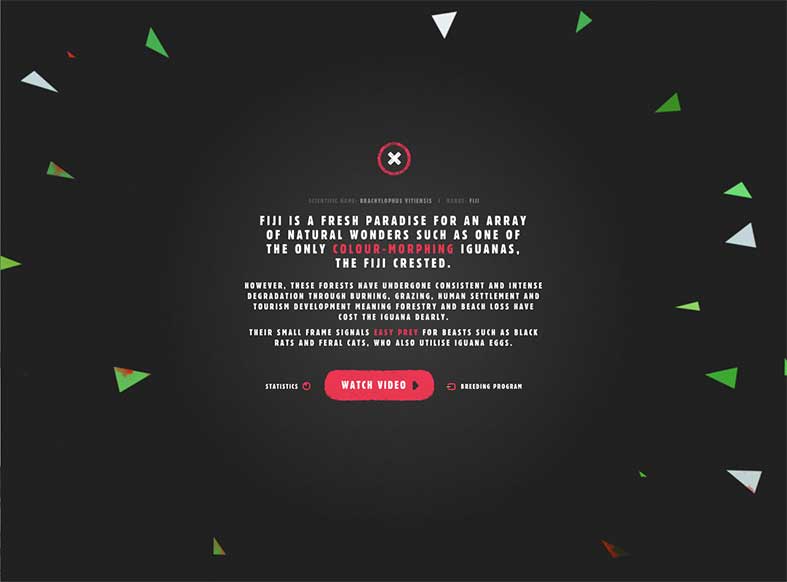
You can also find out specific info about the particular threat to the animal.
The left hand side nav is more for functions – sound / automatic slideshow / and a secondary nav to get to all the animals.
The animal title area also serves as a link to detail info about the particular animal’s endangerment statistics – and to download wallpaper.

You may also notice the circle icon moving in time with the color or shape change of the animal.
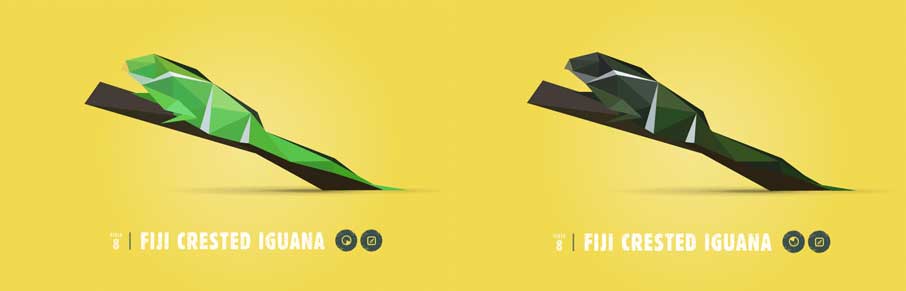
Finally – there’s your chance to purchase a poster of the animals – whose proceeds go to the Evolutionarily Distinct & Globally Endangered fund.
Our buddy Russ Pate @RussPate from Wier Stewart @WierStewart sent this one to us – Thanks Russ!
Interested in Unmatchedstyle profiling your website in-depth? Just fill out the form – “need the info” – make sure you talk a little about the design so we can quote you. We can’t guarantee it to be fully analyzed like this one, and can’t guarantee it will get reviewed (we get a lot of requests, and try to have some standards) – but we’re making this type of long form gallery post part of our weekly editorial calendar. Let us know what you think!

People remember the first and last things you show them and lose the middle. Here's the memory science behind the serial position effect and…
Read More →
Large, close targets are faster to hit than small, distant ones, that's Fitts's Law. A look at the 1954 rule behind buttons, prime and…
Read More →
Your working memory holds about four things, not seven. Chunking groups loose information into meaningful units that slip past that limit, the psychology behind…
Read More →