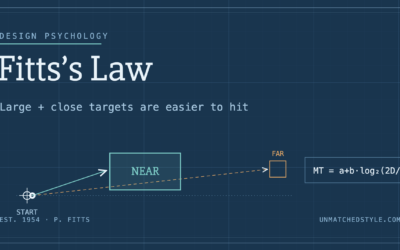
Fitts’s Law: Why the Easy Button Wins
Large, close targets are faster to hit than small, distant ones, that’s Fitts’s Law. A look at the 1954 rule behind buttons, prime and magic pixels, thumb zones, and dark patterns.


Mathieu Crepel
Born in Tarbes at the foot of the Pyrenees, Mathieu grew up with an innate connection to nature, leading to an extraordinary career in snowboarding. A four-time world champion and two-time Olympian, Mathieu has now shifted his focus to all-terrain adventures, seamlessly blending snowboarding, surfing, and environmental advocacy. His ventures span from riding waves in Hawaii to snowboarding under the Northern Lights in Norway. Beyond his athletic prowess, Mathieu is deeply committed to raising environmental awareness, particularly on issues like glacier melting. As an ambassador of the Water Family, he inspires the next generation to protect our planet through the power of outdoor sports.

Large, close targets are faster to hit than small, distant ones, that’s Fitts’s Law. A look at the 1954 rule behind buttons, prime and magic pixels, thumb zones, and dark patterns.
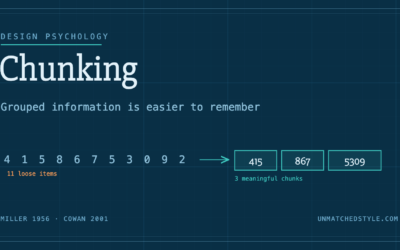
Your working memory holds about four things, not seven. Chunking groups loose information into meaningful units that slip past that limit, the psychology behind phone numbers, scannable pages, multi-step forms, and grouped navigation.

The Call to Action hasn’t changed in a decade, but the bar has. A fresh look at prominence, copy, mobile tap targets, and accessibility, with lessons from three major design systems.
0 Comments